Improving wellbeing through healthier relationships with technology
Screen Sense supports people who enjoy games, social media and other digital apps but are finding it harder to stay focused, switch off or feel fully present in daily life.
Here you’ll find clear, accessible information about digital habits, practical tools to understand what’s happening beneath the surface and self-paced courses designed to support healthier, more balanced use over time.
Screen Sense uses insights from digital psychology (cyberpsychology) to support adults and young people (16+) in ways that respect autonomy and choice, free from shame, guilt or fear.

Cyberpsychology focuses on how human behaviour, thoughts and emotions are influenced by digital technology including interactions with the internet, social media, online gaming, virtual reality and AI. It explores online identity, cyberbullying, digital addiction and the psychological impact of immersive technology, bridging traditional psychology with the digital world. These insights inform practical strategies and tools to help people manage their digital habits and wellbeing.
Thanks for visiting Screen Sense! I’m Neal, a former professional gamer known as Mirage. I competed internationally, spending thousands of hours in digital environments where focus, performance and screen time were everything.
That experience gave me a front-row view of how powerful digital systems are and how difficult it can be to disengage from them once they become part of daily life.
If you’ve ever felt pulled too far into the screen, this is a place to understand why and what can be done next.
Neal Thompson
Digital Psychology Specialist
MSc Health Psychology
Former professional gamer (Mirage)
We all have our favourite ways to scroll, game or watch online content. Over time, these habits can quietly drain your energy, scatter your focus and affect your wellbeing.

76% of people believe they spend “too much” time on their phones. Of all the adults surveyed, 40% are spending five or more hours on their phone each day and 20% are spending seven or more. Average screen time is five hours. 74% of people who have tried to reduce their screen time struggle to do so.
BePresentThe amount of time kids’ spend online worried 75% of parents and is the number one worry. Yet, 50% (of parents) said they spent too much time on their own devices, and 66% admit to relying on screens as a bargaining chip to distract children.
nib SurveyWe find that 15% of 15 year olds report using the internet for more than 6 hours per day on a weekday outside of school. Once daily internet use (on weekdays outside of school) exceeds about two hours, we find no positive association of internet use and wellbeing.
Motu Economic and Public Research Policy


Problematic internet use can show up in various ways. Take our free, anonymous self-assessment quiz to see if reducing your screen time could be helpful.
Quiz
Stay up to date with the latest media coverage on digital wellbeing from around the world. We bring together important stories about screen time, online behaviour and healthier tech habits.

The latest research on Internet Addiction (IA) and Internet Gaming Disorder (IGD). This research highlights the importance of managing screen time.

View video interviews, documentaries, panels and talks that explore screen-time balance — from real-world stories to expert insights.
Watch
Each book offers a different lens on digital wellbeing: whether you’re curious about the brain’s reward system, the impact of social media, or self-regulation in the digital era.

Guest speaker bookings are available at your next event, podcast or webinar on a range of digital wellbeing related topics.

The test, led by the UK government, will see 300 teens have their social apps disabled entirely, blocked overnight or capped to one hour's use - with some also seeing no such changes at all - in order to compare their experiences.
Read More
The World Health Organisation (WHO) has officially added video game addiction — characterised by "a pattern of persistent or recurrent gaming behaviour" that "takes precedence over other life interests" — to their International Classification of Diseases (ICD) database.
Read More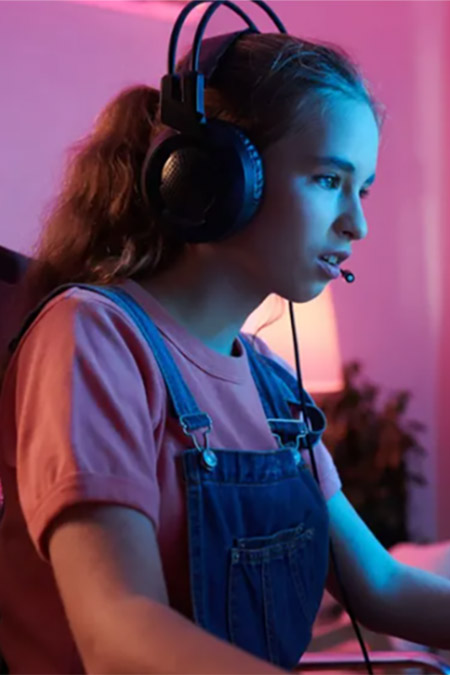
Gaming platforms and social media pose similar risks for children: excessive time spent online, and potential exposure to predators, harmful content or bullying. Dr Daniela Vecchio wonders why gaming platforms have not been included in Australia's "world-first" social media ban for under-16s.
Read More
The survey, which nib conducts annually with global research company, One Picture, canvassed the views of 1,226 parents, step-parents and guardians of children under 18, nationally. This year the survey shows technology use continues to nag at parents, with the real impacts on health and wellbeing increasingly evident. Technology use remains the number one worry for 70% of parents, with 24% ‘extremely concerned’.
Read MoreWe greatly appreciate your feedback on this website and would like to know what information you found useful and what services you would like to see next. Please take a couple of minutes to let us know.
survey