

nternet Use Disorders (IUDs) are emerging as a societal challenge. Evidence-based treatment options are scarce. Digital health interventions may be promising to deliver psychological treatment to individuals with IUDs directly in their online setting. The aim of this study was to evaluate the efficacy of a digital health intervention for IUDs compared to a waitlist control group (WCG).
In a two-armed randomized controlled trial, N = 130 individuals showing IUDs (Internet Addiction Test; IAT ≥49) were randomly allocated to the intervention group (IG; n = 65) or WCG (n = 65). The intervention consisted of 7 sessions based on cognitive behavioral therapy. The primary outcome was IUD symptom severity measured via the IAT at post treatment 7 weeks after randomization. Secondary outcomes included IUD symptoms (Compulsive Internet Use Scale; CIUS), quality of life, depressive and anxiety symptoms, and other psychosocial variables associated with IUDs.
Participants were on average 28.45 years old (SD = 10.59) and 50% identified as women, 49% as men, and 1% as non-binary. The IG (n = 65) showed significantly less IUD symptom severity (IAT) (d = 0.54, 95% CI 0.19–0.89) and symptoms (d = 0.57, 95% CI 0.22–0.92) than the WCG (n = 65) at post-treatment. Study attrition was 20%. Effects on all other secondary outcomes were not significant. On average, participants completed 67.5% of the intervention.
A digital health intervention could be a promising first step to reduce IUD symptom severity.
Read the full article on AKJournals.

The amount our kids use technology, including social media, is the number one worry for 70% of New Zealand parents, according to the latest State of the Nation Parenting Survey from NIB. Now get this stat: 50% of parents admit they are addicted to their own devices.
Read More
Gaming platforms and social media pose similar risks for children: excessive time spent online, and potential exposure to predators, harmful content or bullying. Dr Daniela Vecchio wonders why gaming platforms have not been included in Australia's "world-first" social media ban for under-16s.
Read More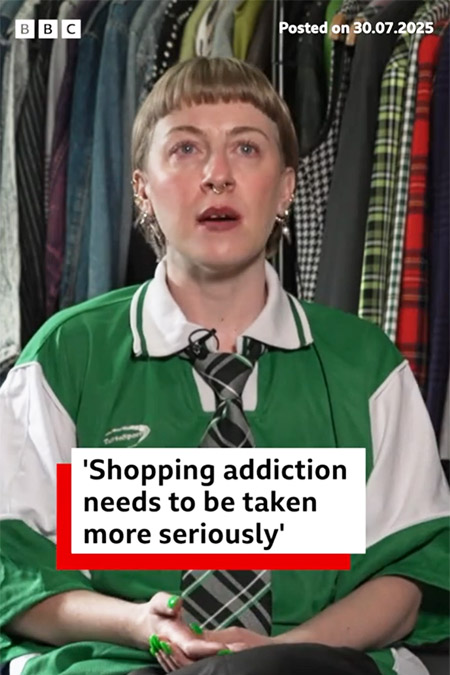
A day of retail therapy can be just the ticket for some people to help them feel better about themselves. But what happens when you can't stop shopping? Surrounded by racks of shirts, dresses and jumpers, Lucy tells me that she could spend up to 14 hours a day searching out new clothes as an escape from reality.
Read MoreWe greatly appreciate your feedback on this website and would like to know what information you found useful and what services you would like to see next. Please take a couple of minutes to let us know.
survey


